
























![SNAP HAPPY Recording on a GoPro for social media, senior Sam Mellon has recently started a weekly sports podcast. “[Senior] Brendan Feeney and I have been talking about doing a sports podcast forever. We love talking about sports and we just grabbed [senior] Will Hanas and went along with it,” Mellon said.](https://mhsnews.net/wp-content/uploads/2025/04/sam-892x1200.png)


















In recent months, a number of bills have been proposed within the Indiana legislature that would, if passed, make significant changes to school policies and curriculum at MHS and all other state school districts.
Senate bill 78, for example, would require the school to adopt stricter phone policies; students would either be expected to leave their phones at home throughout the school day or keep them locked within Yondr pouches.
Last year, House Bill 1231 proposed that the biblical 10 commandments be mandatorily displayed in every educational institution. The legislation has recently been amended in Senate Bill 1086 to instead add the religious text to a list of protected educational writings, giving instructors the option of posting the commandments in their classrooms rather than a mandate.
“There’s been a big debate about having the 10 commandments in the classroom and things like that, and while it’s been temporarily at hold, these things always have ways of reemerging,” government teacher Michael Gordon said.
Senate Bill 88 would additionally require Indiana school curriculums to emphasize and actively promote the “Success Sequence”: the notion that financial stability is only achieved by graduating high school, securing a full-time job and waiting until marriage to have children.
Senate Bills 76 and 182 would subsequently aim for the abolition of “sanctuary schools.” Bill 182 would allow the government to fine the school district if it is found allowing transgender students to use restrooms that align with the gender they identify as; 76 would mandate that all local government institutions, including schools, cooperate with ICE activities.
As of our date of publication, none of these Bills have yet been passed: for a bill to become law, it must be approved by both the state House of Representatives and Senate before finally being approved by Indiana’s governor. Within this process, however, are many challenges that are unique to the state regarding lawmaking.
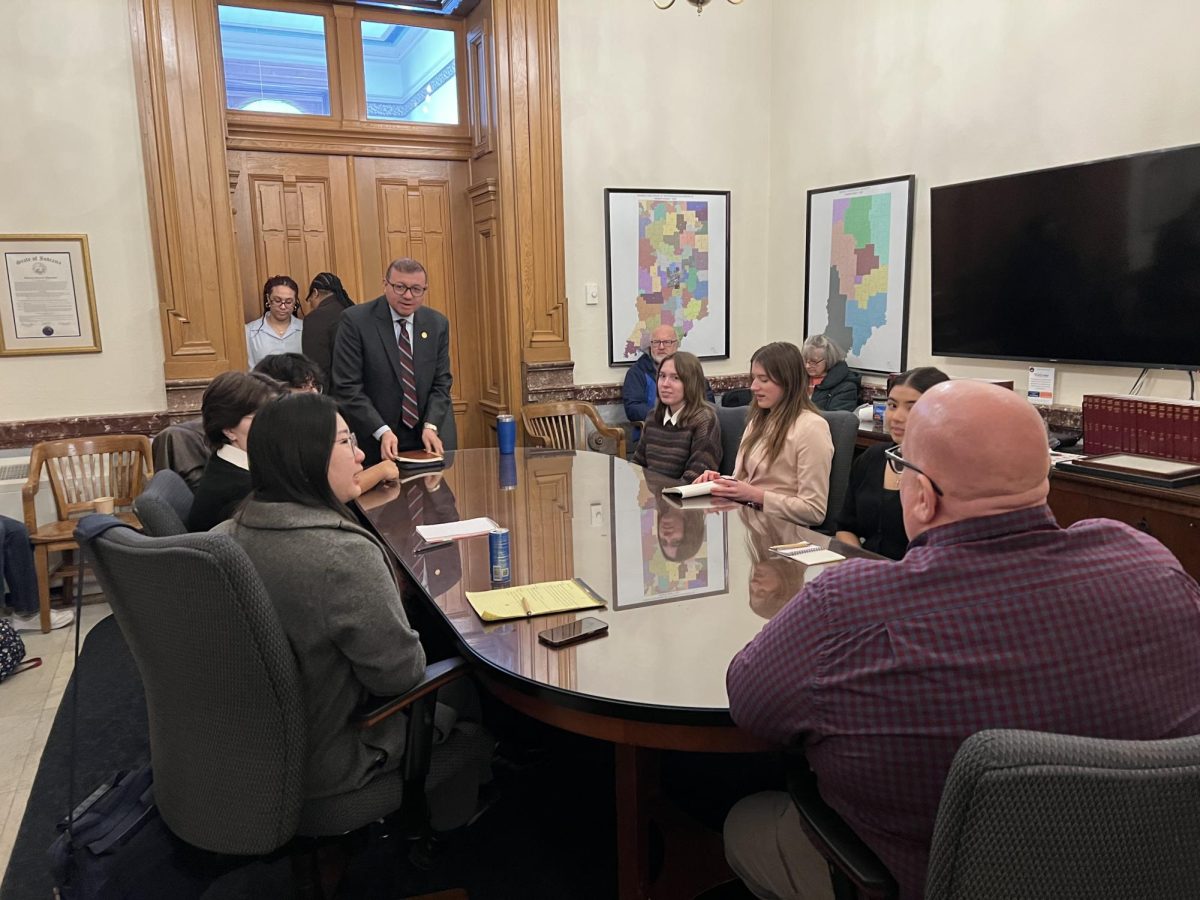
“We’re far more gerrymandered,” Gordon said. “If gerrymandering’s flexibility is based on the number of districts, you can gerrymander our delegation to Congress only so much with nine districts. You can only begin to fathom how much we can gerrymander our state house of representatives with 100 districts.”
Gerrymandering, a method of creating social and electoral imbalance between political parties, has resulted in most senate votes being held solely by Republican-oriented officials.
“It’s pretty common in our state to have deep, deep red and blue,” Gordon said. “This is the essence of the curse of democracy and gerrymandering districts.”